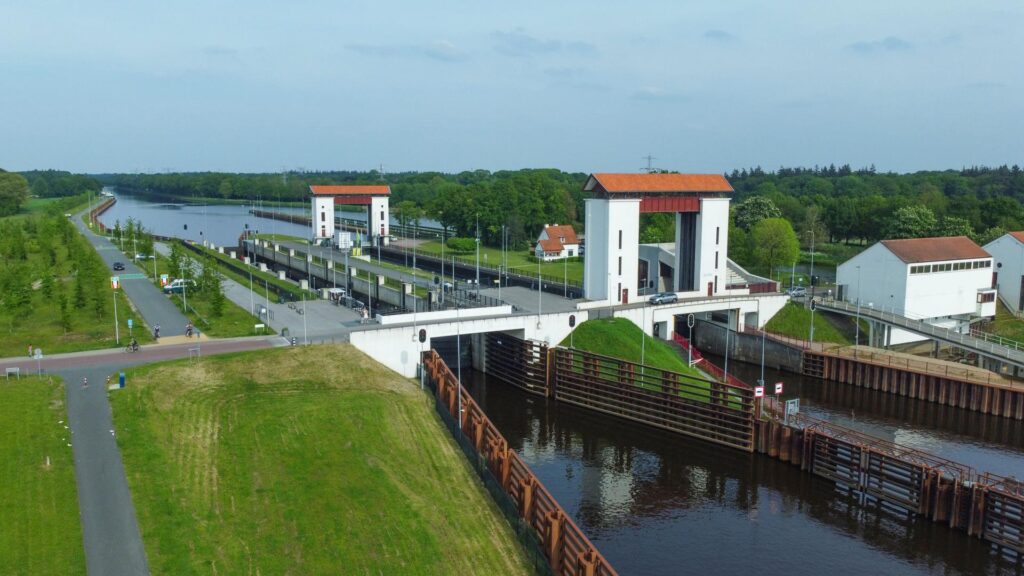
Introduction to the System of Interest: Lock Eefde
Around 2014–2015, Rijkswaterstaat was confronted with a structurally growing problem on the Twente Canal:
the existing lock at Eefde had become a capacity bottleneck for inland navigation. Vessel sizes had increased, traffic volumes were steadily growing, and the lock’s availability had become critical for the economic accessibility of the Twente region.
At that time, Rijkswaterstaat initiated the process of defining requirements for a second lock chamber, to be constructed next to the existing lock. The objective was explicitly not to replace the old lock, but to strengthen the system as a whole by adding capacity, robustness, and future-proofing to the canal corridor.
From a systems perspective, this marked a clear shift:
- from a single-point-of-failure asset,
- to a redundant, scalable lock complex supporting long-term network performance.
Positioning in IMPULS3 terms
Seen through the IMPULS3 lens, the development around 2015 can be characterized as follows:
- Stakeholder need
Ensure reliable, future-proof inland navigation on the Twente Canal. - System function (stable)
Enable controlled vertical transfer of inland vessels across water-level differences. - Solution evolution (variable)
From a single lock chamber → to a dual-chamber lock complex, increasing capacity and resilience.
Crucially, the function remained unchanged, while the physical realization evolved. This distinction is central in IMPULS3 and explains why the requirements work at Rijkswaterstaat focused on capacity, availability, and performance, rather than on prescribing a specific design.
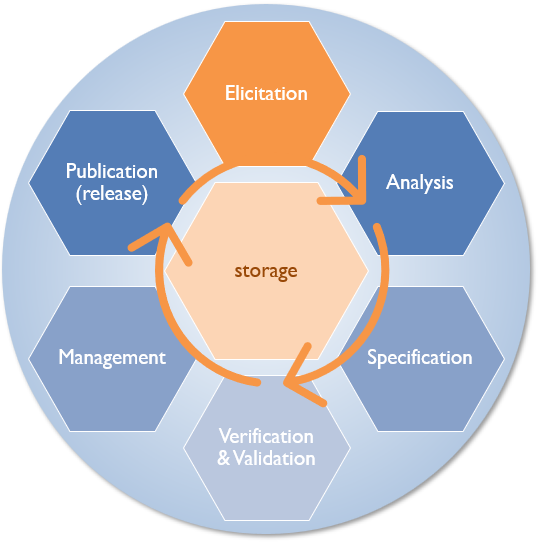
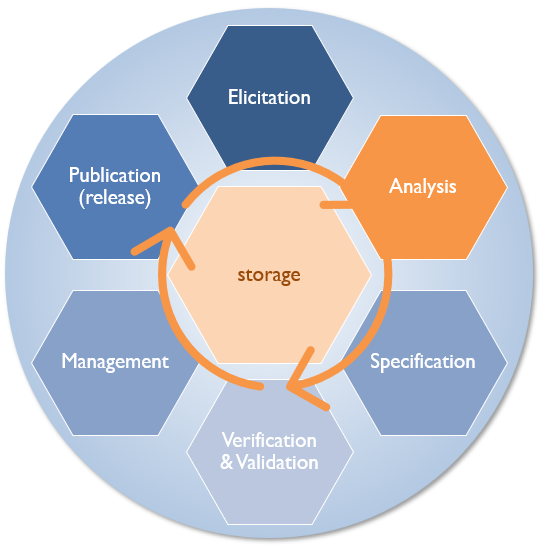
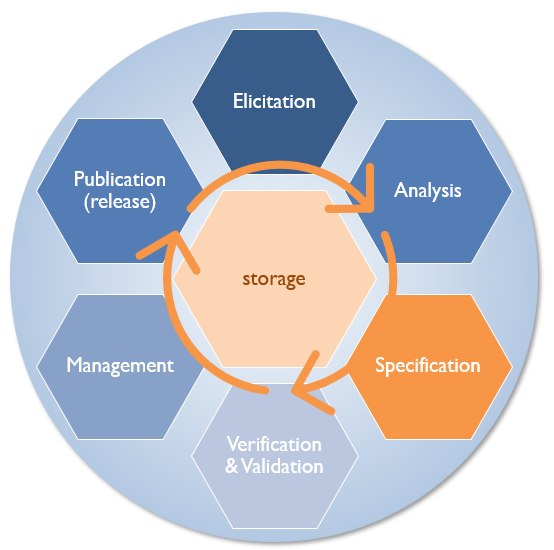
For this use case we start at the Analysis process step.
Question 1: what is the primary function of the system of interest Lock Eefde?
Primary function
The main function of Lock Eefde is to enable inland vessels to pass safely and efficiently between water reaches with different water levels, thereby ensuring continuous navigability of the Twente Canal.
From a systems-engineering perspective, Lock Eefde is a critical enabling function within the Dutch inland-waterway transport system:
- Overcoming hydraulic level differences
The Twente Canal connects the IJssel river system to the Twente region. Due to elevation differences and water-level regulation requirements, uninterrupted navigation is not possible without a lock. Lock Eefde provides the controlled vertical transfer of vessels between canal sections. - Guaranteeing accessibility of the Twente region
By enabling vessel passage, the lock supports industrial logistics, particularly bulk transport (e.g., raw materials, construction materials, and agricultural products) to and from Twente. Without this lock, the canal would lose its function as a reliable transport corridor. - Capacity and reliability node
Historically, Lock Eefde was a bottleneck in the canal. The addition of a second, larger lock chamber (commissioned in 2020) increased throughput, reduced waiting times, and improved robustness of the network. Functionally, this reinforces availability, predictability, and scalability of inland navigation. - System-of-systems role
The lock does not operate in isolation. It interfaces with:- Water-level management systems (hydraulic control)Traffic management for inland shipping Regional and national freight transport chains
Lock Eefde enables the controlled vertical transfer of inland vessels between canal sections with differing water levels, ensuring continuous, safe, and reliable navigation on the Twente Canal.
The second part of the Analysis process step establishes the properties and constraints of the primary function and identifies the secondary functions and their properties and constraints.
Question 2: what are the properties and constraints of the primary function?
1. Primary Function
F-EEFDE-001 — Enable vertical transfer of inland vessels
Function (what the system must do)
Enable the controlled vertical transfer of inland vessels between canal sections with different water levels.
Functional intent
Ensure continuous navigability of the Twente Canal for inland shipping, independent of hydraulic level differences.
Properties of the Primary Function
(Once quantified, these become requirements in IMPULS3.)
| Property | Description |
|---|---|
| Vessel size capacity | Maximum length, beam, draught, and air draft of vessels that can be transferred |
| Transfer height | Maximum and minimum water-level difference that can be accommodated |
| Throughput | Number of vessels transferred per time unit |
| Availability | Percentage of time the function is operational |
| Safety level | Probability of incidents during transfer |
| Transfer time | Time required per lockage |
Constraints on the Primary Function
| Constraint category | Description |
|---|---|
| Hydraulic constraints | Dependence on upstream/downstream water levels and discharge regimes |
| Regulatory constraints | Compliance with inland navigation, safety, and water management legislation |
| Environmental constraints | Noise, emissions, water usage, and ecological impact |
| Spatial constraints | Physical footprint within existing canal corridor |
| Operational constraints | Integration with traffic management and operating schedules |
Question 3: what are the secondary functions?
2. Secondary Functions
F-EEFDE-002 — Regulate vessel traffic flow
Function
Sequence, coordinate, and control vessel movements through the lock to prevent conflicts and delays.
Functional rationale
Without traffic regulation, the primary transfer function cannot be executed safely or efficiently.
F-EEFDE-003 — Isolate water bodies hydraulically
Function
Temporarily separate upstream and downstream water reaches during vessel transfer.
Functional rationale
Hydraulic isolation is a prerequisite for controlled water-level adjustment.
F-EEFDE-004 — Support safe vessel entry and exit
Function
Enable vessels to safely enter, remain within, and exit the lock chamber.
Functional rationale
Safety during transitional phases is essential to preserve vessel integrity, crew safety, and infrastructure.
Question 4: what are system properties?
3. System Properties (not tied to a single function)
| System Property | Description |
|---|---|
| Design lifetime | Expected operational lifespan of the lock system |
| Maintainability | Ability to inspect, service, and repair without excessive downtime |
| Reliability | Probability of failure-free operation over time |
| Redundancy | Degree to which failure of one element affects system operation |
| Scalability | Ability to accommodate future increases in traffic demand |
Question 5: what are system constraints?
4. System Constraints (overarching)
| Constraint | Description |
|---|---|
| Legal framework | Dutch and EU inland navigation and water management law |
| Integration constraint | Must operate within Rijkswaterstaat national waterway network |
| Contractual constraints | Performance obligations to users and authorities |
| Safety governance | Mandatory compliance with safety management systems |
| Environmental permits | Boundaries imposed by environmental impact assessments |
In the actual situation we would need to identify the properties and constraints for the secondary functions too. For this SRE case we limit the Analysis to the above.
In addition, we take the primary function definition as the first requirement as it does not need further quantification:
EEFDE-REQ-0000 — Enable vertical transfer of inland vessels
Question 6: quantify the properties (function-related and system-related)
Quantified requirements derived from properties
Capacity and dimensional envelope
EEFDE-REQ-0001 — Vessel dimensional capability (Class Va)
- Type: Requirement
- Category: Functional property (capacity)
- Requirement formulation: The system shall enable passage (locking) of inland vessels up to 110 m length and 11.4 m beam. Rijkswaterstaat+1
- Rationale: Enables the intended vessel class on the Twente Canals and supports logistics to Twente.
EEFDE-REQ-0002 — Maximum lockable draught (Noordersluis)
- Type: Requirement
- Category: Functional property (hydraulic capacity)
- Requirement formulation: The system shall enable passage of vessels with a maximum aflaaddiepte / vaardiepte of 3.50 m (Noordersluis). Rijkswaterstaat+1
- Notes: This is the public figure stated by Rijkswaterstaat for the new chamber.
EEFDE-REQ-0003 — Lock chamber useful dimensions (existing chamber)
- Type: Requirement
- Category: System property (geometric envelope)
- Requirement formulation: The system shall provide a lock chamber with at least 140 m length and 12.0 m width (Zuider/older chamber). Rijkswaterstaat+1
EEFDE-REQ-0004 — Lock chamber useful dimensions (Noordersluis)
- Type: Requirement
- Category: System property (geometric envelope)
- Requirement formulation: The system shall provide a lock chamber with at least 125 m length and 12.5 m width (Noordersluis). Rijkswaterstaat
Vertical transfer capability
EEFDE-REQ-0005 — Water level difference
- Type: Requirement
- Category: Functional property (transfer height)
- Requirement formulation: The system shall enable vessel transfer over a water-level difference (verval) of 6 m. Rijkswaterstaat
Throughput and network capacity contribution
EEFDE-REQ-0006 — Annual traffic growth capability (network-level)
- Type: Requirement (system contribution / context requirement)
- Category: Performance (capacity contribution)
- Requirement formulation: The lock complex shall support growth of inland shipping on the Twente Canals from 15,000 to 20,000 vessels per year (network capacity enabled by the additional lock chamber). Rijkswaterstaat
- Rationale: This is an explicitly stated Rijkswaterstaat capacity objective linked to the second chamber.
Note (IMPULS3 discipline): this is a system contribution requirement; it is measurable, but it is influenced by external factors (fleet demand, canal restrictions, traffic management). Still valid as a top-level quantified objective.
Operating window (service provision)
EEFDE-REQ-0007 — Standard operating hours
- Type: Requirement
- Category: Operational constraint (service window)
- Requirement formulation: The system shall provide lock operations (bediening) at least Monday 06:00–Saturday 22:00 and Sunday 06:00–22:00. Binnenvaart Kennis
EEFDE-REQ-0008 — Reduced operating hours on 24 and 31 December
- Type: Requirement
- Category: Operational constraint (calendar exceptions)
- Requirement formulation: On 24 December and 31 December, lock operations shall be provided until 18:00. Binnenvaart Kennis
Here’s a challenge for you: can you find sufficient (publicly available) information to quantify the following properties?
Properties that still require quantification (TBD)
EEFDE-REQ-TBD-0009 — Availability
- Needs: the contractual/service-level target (e.g., annual availability %, max downtime per year) from Rijkswaterstaat’s service-level regime or the DBFM performance requirements. (Public sources confirm DBFM uses performance requirements aligned to Rijkswaterstaat, but not the numeric threshold.) Rijksoverheid+1
EEFDE-REQ-TBD-0010 — Mean lockage time / cycle time
- Needs: operational KPI definition (average/95th percentile lockage duration by vessel type and traffic condition).
EEFDE-REQ-TBD-0011 — Safety performance
- Needs: quantified safety targets (incident rate, collision probability, acceptable risk criteria), typically from safety case / RAMS documentation.
EEFDE-REQ-TBD-0012 — Maximum waiting time / queue KPI
- Needs: the formal queueing KPI (e.g., “95% of vessels wait < X minutes”), commonly part of network service objectives or contract KPIs.
Below you find the information in the Configueres app. The information is visualized and structured according to the semantic principles (Nodes and Edges). You can follow the links by double-clicking on a rectangle (this is setting the viewpoint / perspective). The rectangle that is selected as viewpoint gets a red background. Top-down traces are usually made visible by selecting the “inverse” relations. But this depends entirely how the user has defines the relations of course. Try to follow the instructions below and see what happens. Have fun!
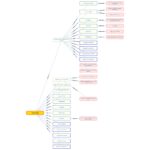

Top-down traces: start by selecting “Lock Eefde” as viewpoint.
Then select the inverse relations:
– (inverse) defines;
– (inverse) defines function;
– (inverse) constrains function;
– (inverse) specifies;
– (inverse) quantifies;
References
Rijkswaterstaat. (2020). Nieuwe sluis Eefde vergroot capaciteit Twentekanalen.
https://www.rijkswaterstaat.nl/water/waterbeheer/nieuwe-sluis-eefde
Rijkswaterstaat. (n.d.). Twentekanalen.
https://www.rijkswaterstaat.nl/water/waterbeheer/twentekanalen
Ministerie van Infrastructuur en Waterstaat. (2019). Ontwikkeling hoofdvaarwegennet.
https://www.rijksoverheid.nl/onderwerpen/vaarwegen
Rijkswaterstaat. (n.d.). Sluizencomplex Eefde.
https://www.rijkswaterstaat.nl/water/waterbeheer/bescherming-tegen-het-water/waterkeringen/dammen-sluizen-en-stuwen/sluizencomplex-eefde
Rijkswaterstaat. (2020). Sluis Eefde: Zo werkt de nieuwe sluiskolk (factsheet).
https://open.rijkswaterstaat.nl/@205704/sluis-eefde-werkt-nieuwe-sluiskolk/
Binnenvaartkennis. (2021). Twentekanaal (PDF).
https://www.binnenvaartkennis.nl/wp-content/uploads/2021/02/Twentekanaal.pdf
Rijksoverheid. (2025). J Deltafonds Rijksbegroting 2026 (PDF).
https://www.rijksoverheid.nl/binaries/rijksoverheid/documenten/begrotingen/2025/09/16/j-deltafonds-rijksbegroting-2026/J_Deltafonds.pdf
